 Happy Independence Day to all.
August 15, 2006
August 09, 2006
In memory
Today is the 65th anniversary of the Quit India Movement, the revolutionary movement that drew in a great victory for India under the British rule. It all started on the 9th of August in 1942 and went on till the 15th of August, 1947. It is sad that the day is being celebrated as just 'Raksha Bandhan' and not in remembrance of Quit India, the significant crusade that involved every Indian irrespective of caste, creed, religion or region and that which reminds us of the oneness that held the country together 'once upon a time'.
August 07, 2006
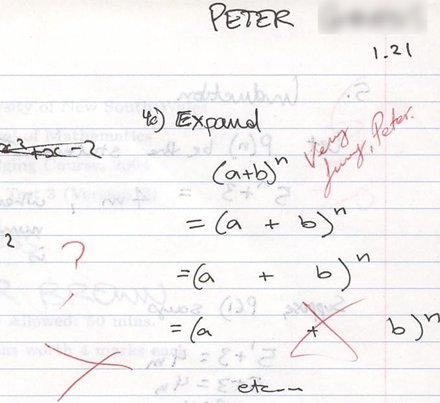
Creative answering
I would have loved to write something like this in the answer paper but fear of a 'Fail' grade had always kept me away from it. :D

July 24, 2006
Short Story
This was the first story that I penned down as a child. A short story for children (by a child :D) published under the children's section in an annual souvenir of a library. The unevenly split sentences and other small mistakes should be overlooked since it was written at the age of eleven years. I am reproducing the same here without any changes.
It was a cloudy night. Nobody was in the house except Ramesh and his servant, Bhima. Ramesh was studying in sixth standard. His parents had gone to a function. Ramesh and his uncle were in the house. On receiving an urgent phone call, his uncle went to his office. Ramesh was about to sleep when the door bell rang. He went and opened the door. There stood his dear uncle with a packet of chocolates in his hand. He ate some and went to bed. After some time, his uncle heard some sound coming from his study room, where he had kept his income in a safe. His uncle went to the room. He was stunned to see a man wearing an overcoat with cross buttons and a mask over his face. The man was going through some files dealing with important matters. His uncle shouted, "thief-thief". The man took a pistol and pointed at Ramesh's uncle. His uncle moved forward and the thief hit him on his head. Ramesh's uncle became unconscious. Ramesh woke up on hearing the noise. He became suspicious and thought something fishy was going on in his uncle's room. He slowly crept out of his bed towards his uncle's room. Suddenly, he was stunned to see his uncle unconscious. He also saw a man taking something from the safe. He quietly went near the telephone and rang up the police. The police came and arrested the thief and removed his mask. There stood Ramesh's dear servant, Bhima. Bhima said that he was innocent, but some outlaws had kidnapped his daughter and demanded that if he wants his daughter back, he must go and get those important papers from Ramesh's uncle. Bhima did as he was told. But, he was caught. Then the police asked him whether he could give any clues to catch the outlaws. Bhima, along with the police, went to the place where the outlaws lived. After a fierce fight, the outlaws were caught. Bhima got his daughter back. When Ramesh's parents returned home, they were proud of their son. His uncle was also very happy for saving his important papers. Ramesh got a reward for his bravery. He became a hero in the eyes of his friends.
It was a cloudy night. Nobody was in the house except Ramesh and his servant, Bhima. Ramesh was studying in sixth standard. His parents had gone to a function. Ramesh and his uncle were in the house. On receiving an urgent phone call, his uncle went to his office. Ramesh was about to sleep when the door bell rang. He went and opened the door. There stood his dear uncle with a packet of chocolates in his hand. He ate some and went to bed. After some time, his uncle heard some sound coming from his study room, where he had kept his income in a safe. His uncle went to the room. He was stunned to see a man wearing an overcoat with cross buttons and a mask over his face. The man was going through some files dealing with important matters. His uncle shouted, "thief-thief". The man took a pistol and pointed at Ramesh's uncle. His uncle moved forward and the thief hit him on his head. Ramesh's uncle became unconscious. Ramesh woke up on hearing the noise. He became suspicious and thought something fishy was going on in his uncle's room. He slowly crept out of his bed towards his uncle's room. Suddenly, he was stunned to see his uncle unconscious. He also saw a man taking something from the safe. He quietly went near the telephone and rang up the police. The police came and arrested the thief and removed his mask. There stood Ramesh's dear servant, Bhima. Bhima said that he was innocent, but some outlaws had kidnapped his daughter and demanded that if he wants his daughter back, he must go and get those important papers from Ramesh's uncle. Bhima did as he was told. But, he was caught. Then the police asked him whether he could give any clues to catch the outlaws. Bhima, along with the police, went to the place where the outlaws lived. After a fierce fight, the outlaws were caught. Bhima got his daughter back. When Ramesh's parents returned home, they were proud of their son. His uncle was also very happy for saving his important papers. Ramesh got a reward for his bravery. He became a hero in the eyes of his friends.
July 17, 2006
Back on track
I am currently back on track reading,
The Hungry Tide - by Amitav Ghosh
The novel primarily revolves around the characters- Kanai Dutt, a literary translator, Piyali Roy (Piya), a cetologist and, Nirmal and Nilima, a couple running a welfare trust in Lusibari. The entire story is predominantly set in Kolkatta, Canning and Lusibari in West Bengal amongst others.
The Hungry Tide won the Hutch Crossword Book Award for the best work in English fiction in 2004. Amitav Ghosh is also known for his novel The Glass Palace.
The Hungry Tide - by Amitav Ghosh
The novel primarily revolves around the characters- Kanai Dutt, a literary translator, Piyali Roy (Piya), a cetologist and, Nirmal and Nilima, a couple running a welfare trust in Lusibari. The entire story is predominantly set in Kolkatta, Canning and Lusibari in West Bengal amongst others.
The Hungry Tide won the Hutch Crossword Book Award for the best work in English fiction in 2004. Amitav Ghosh is also known for his novel The Glass Palace.
July 14, 2006
The Dream Land of India
I never had any serious thoughts or dreams of landing in Mumbai. I went there last week to spend some time with my brother and also to shun my boredom. I might not have got to experience the real Mumbai in the short time that I spent there, but I have my share of opinions and impressions about the city. The first being the hugely damaged roads due to the heavy down pour in the city last week. A journey in an auto-rickshaw can make you aware of the innumerable potholes made by the fall on the roads. You just cannot escape the roller-coaster rides on the roads. No wonder how much you would suffer if you choose to travel through narrow lanes, leave alone the pukka concrete roads.
And, how can one not say anything about the heavy traffic in the city when talking about Mumbai? Gosh! You better start at seven in the morning to reach office at nine. We travelled for 25 minutes to cover a distance of half a kilometer. Need to say anything else? Such a rush is confined not just to the roads, but one experiences it even at hotels and restaurants, especially in the weekends. We went out for dinner on Sunday at 8:45 PM and were called in only at 10 PM and, I just can’t describe how difficult it was for us to wait empty-bellied until then.
It drizzled twice or thrice daily and the climate wasn’t that bad when you compare it to the soaring heats in many other parts of the country. The skies were mostly cloudy all through the day except for some time during the midday. But, the humidity in the atmosphere can make you feel exhausted. A few minute walk would be well enough to drain the water out of you.
I returned on Tuesday morning and the serial train blasts took place in the evening. It’s such an unfortunate incident. Both the Kashmir and the Mumbai blasts occurred on the same day. How can anyone kill so many innocent people? I feel such cases arise when one tries to hold others responsible for one’s plight - inexplicable vengeance. And, I am really surprised at the way the Mumbaikars have handled it with such resilience and, of course, Kashmir has always been a tacit target. But, is it really good to get along with such insane terrorism every time it strikes you? Should we not look at getting over it forever?
And, how can one not say anything about the heavy traffic in the city when talking about Mumbai? Gosh! You better start at seven in the morning to reach office at nine. We travelled for 25 minutes to cover a distance of half a kilometer. Need to say anything else? Such a rush is confined not just to the roads, but one experiences it even at hotels and restaurants, especially in the weekends. We went out for dinner on Sunday at 8:45 PM and were called in only at 10 PM and, I just can’t describe how difficult it was for us to wait empty-bellied until then.
It drizzled twice or thrice daily and the climate wasn’t that bad when you compare it to the soaring heats in many other parts of the country. The skies were mostly cloudy all through the day except for some time during the midday. But, the humidity in the atmosphere can make you feel exhausted. A few minute walk would be well enough to drain the water out of you.
I returned on Tuesday morning and the serial train blasts took place in the evening. It’s such an unfortunate incident. Both the Kashmir and the Mumbai blasts occurred on the same day. How can anyone kill so many innocent people? I feel such cases arise when one tries to hold others responsible for one’s plight - inexplicable vengeance. And, I am really surprised at the way the Mumbaikars have handled it with such resilience and, of course, Kashmir has always been a tacit target. But, is it really good to get along with such insane terrorism every time it strikes you? Should we not look at getting over it forever?
July 13, 2006
Market chaos!
This is a really funny cartoon depicting the possible confusion that might have sent the market sizzling down a few weeks ago.


June 11, 2006
Investing in a crashing market
This is a decent article that I have come across on Rediff.
The art of investing in falling markets
And, MoneyLife is an upcoming business magazine. The print copy is really good, but the online one is not being updated properly. The June issue has an interesting article on the study of investing in art.
The art of investing in falling markets
And, MoneyLife is an upcoming business magazine. The print copy is really good, but the online one is not being updated properly. The June issue has an interesting article on the study of investing in art.
May 26, 2006
Demeaning a Nation- A thousand ways
India can brag about such book in the coming future and I think we are not far from it. And, only Indians can come out with newer ways of doing it.
There's this article on Rediff titled 'No one wants to hear us'. I must admit that it is one of the most disgusting articles I have read on the reservation issue. I am going to italicize the Rediff story (adapted to suit the post's need) and my consequent comments would be in normal font.
Mr. Tusha Jagtap, a doctor by profession and President, Dr Ambedkar Reservation Protection Front, a Dalit organisation, says, "My father was a railway employee and if I did not have the benefit of reservation I would not have become a doctor."
He secured 61 marks in the Science stream in his XII standard and got a medical seat just because he is a Dalit. But, nowhere in India you would find an upper caste student with 70 plus qualifying marks, getting a seat (No matter how poor he is). Why this discrimination? How can anyone trust such doctors?
When I (the Rediff personnel) pointed out that there are many Brahmins today who were cleaning toilets for a living because they didn't have better jobs, Dr Jagtap says: "When Dalits cleaned toilets for 2,000 years nobody thought of this. If Brahmins are cleaning toilets today what is wrong in it?"
Mr. Jagtap, the issue here is not about the work that the Brahmins are doing these days, but it's concerned with the fact that many of the upper caste people are living in economic distress just like the backward classes. And, the government should think of them too.
"After so many years of independence Dalit women are being raped in villages and no one takes this news seriously," he says angrily, "but have you ever read a Brahmin women being raped by a Dalit in this country? Never."
Why do you want to discuss an act as heinous as rape based on caste? Any woman, no matter what caste she belongs to, exploited to such an extent will experience the same trauma. Can't you leave at least a few things as sensitive as these untouched by caste?
There were two really good articles that followed this. I am providing the links to these articles below.
The first is Who are the real dalits of India? and the second is Are Brahmins the Dalits of today?. The second article is a must. It reveals some important statistics that we were not aware of. It shows the need to review the definition of economic backwardness in India and why even some upper castes require reservations to survive with the backward classes in India. I hate saying this. Require Reservations.
There's this article on Rediff titled 'No one wants to hear us'. I must admit that it is one of the most disgusting articles I have read on the reservation issue. I am going to italicize the Rediff story (adapted to suit the post's need) and my consequent comments would be in normal font.
Mr. Tusha Jagtap, a doctor by profession and President, Dr Ambedkar Reservation Protection Front, a Dalit organisation, says, "My father was a railway employee and if I did not have the benefit of reservation I would not have become a doctor."
He secured 61 marks in the Science stream in his XII standard and got a medical seat just because he is a Dalit. But, nowhere in India you would find an upper caste student with 70 plus qualifying marks, getting a seat (No matter how poor he is). Why this discrimination? How can anyone trust such doctors?
When I (the Rediff personnel) pointed out that there are many Brahmins today who were cleaning toilets for a living because they didn't have better jobs, Dr Jagtap says: "When Dalits cleaned toilets for 2,000 years nobody thought of this. If Brahmins are cleaning toilets today what is wrong in it?"
Mr. Jagtap, the issue here is not about the work that the Brahmins are doing these days, but it's concerned with the fact that many of the upper caste people are living in economic distress just like the backward classes. And, the government should think of them too.
"After so many years of independence Dalit women are being raped in villages and no one takes this news seriously," he says angrily, "but have you ever read a Brahmin women being raped by a Dalit in this country? Never."
Why do you want to discuss an act as heinous as rape based on caste? Any woman, no matter what caste she belongs to, exploited to such an extent will experience the same trauma. Can't you leave at least a few things as sensitive as these untouched by caste?
There were two really good articles that followed this. I am providing the links to these articles below.
The first is Who are the real dalits of India? and the second is Are Brahmins the Dalits of today?. The second article is a must. It reveals some important statistics that we were not aware of. It shows the need to review the definition of economic backwardness in India and why even some upper castes require reservations to survive with the backward classes in India. I hate saying this. Require Reservations.
What's your speed?
I am addicted to this thing. This is an online software that calculates your typing speed. I have been using it for the past 30 minutes trying to improve upon my speed. One can select any topic of interest and a paragraph will be given related to the topic for typing. By the way, my typing speed is quite okay, but need to improve it further. I now stand at 60 WPM (Words per Minute), which is not bad. And, I think I should try to aim at the world record which is 232 WPM. :D
Subscribe to:
Posts (Atom)